Read This!

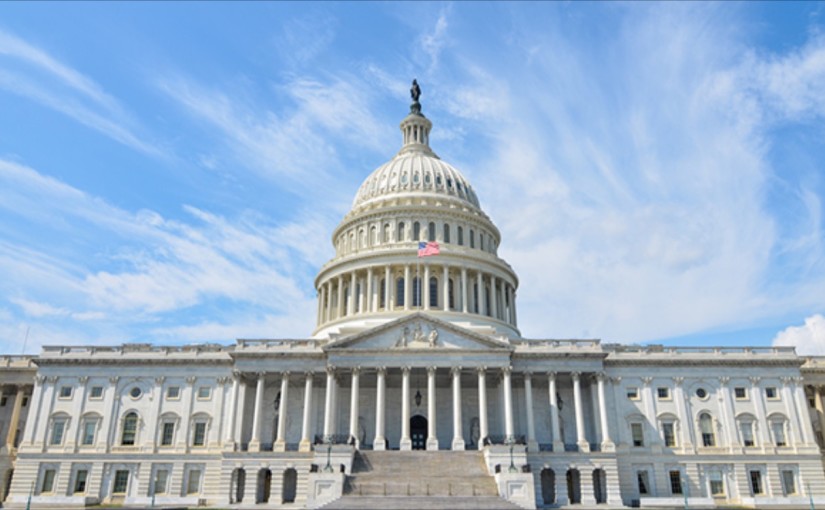
Letters to Congress

Inspired by Hiya Swanhuyser and Jonathan Hunt, I bought a typewriter with the express purpose of writing letters to our congressional, state, and city representatives.

Will you join me?

Here’s what I propose: write a letter a week–typed or longhand–to your representative.

Take a photo of it and share it on Facebook and Twitter, addressed to your representative. ALSO, mail it to them. If you like, attach a campaign contribution ($1-$10?)–put that into the photo you share.

Why typed or longhand? Because they carry more weight. It shows that you put time and effort into your letter.

Why a donation? Money talks. Members of Congress spend most of their time fundraising and you can bet they listen to their donors. Tired of the wealthy and powerful controlling politics? Me too. There are thousands of wealthy individuals and corporations paying for representation. But, there are millions of us. 

Consider this: there was about $1.6 billion raised for this presidential election. There are ~150 million registered voters in the US. If every voter gave a dollar a week to a campaign, we’d contribute a total of $7.8 billion dollars. That’s enough money to drown out current donations nearly 5 times over. That’s how to get yourself heard. Think of it as a GoFundMe campaign to reclaim government. 

Why share to social media? Because there’s strength in numbers. If we share our demands with each other, we build a coalition. Sharing begets more sharing. The more we raise hell, the more we will be heard. Do you think social media is an echo chamber? Imagine if those echoes were heard loudly by your representatives.

I’ll post my first letter tomorrow.

Elon Musk

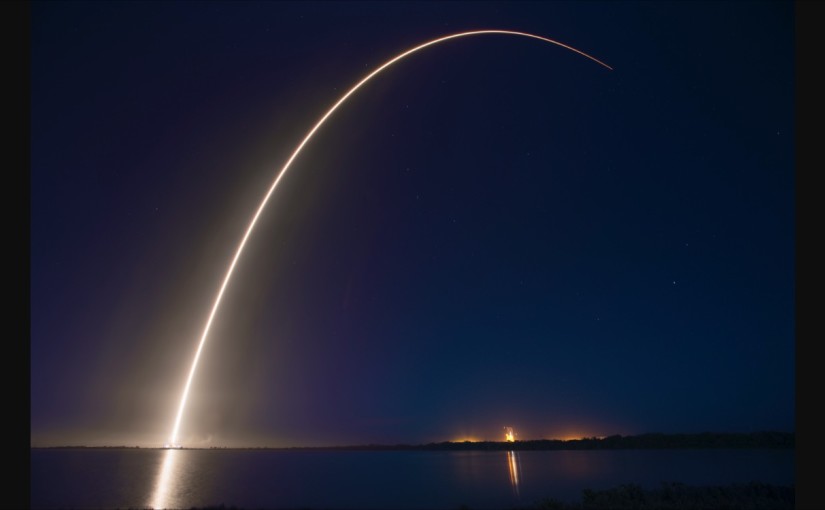
Elon Musk’s mission to Mars is incredible. By itself, it’s just cool as shit.

But, he said something during his presentation that stood out to me in a way few claims in a grand announcement ever do. 

He made a point of saying that any asset acquisition he makes now is solely in the interest of funding this endeavor.

That’s truly astonishing. 

Many people want to create a better world. Few people with his unique ability to deploy resources actually try.

He is currently on a mission to save humanity. 

Tesla, as much as it is a car company, is also a deeply subversive attempt to unseat petroleum (and its knock-on environmental effects) as the engine of civilization. It’s literally a gambit to save the earth.

By itself, that’s a huge undertaking. And, he’s already doing a fantastic job at it.
But, ever the engineer, he’s also looking to mitigate the risk to civilization of a single point of failure (Earth) by moving forward with a plan to make us a multi-planet species.

The yawning world wealth gap shows that nearly every person of means is content to take as much wealth as they can from the benefits of civilization. Stealing all the underpants and then sitting on a pile of underpants is essentially the strategy of those who benefit from capitalism.

Musk, on the other hand, is stealing all the underpants to make sure that there are still people to wear underpants a hundred or a thousand years from now.

The goal of capitalism — indeed, the goal of civilization — should be to ensure, first, the survival of civilization and, second, to ensure that civilization lifts the human condition as much as possible out of misery.

If the wealthy concentrated on at least the latter, civilization would be worthwhile. 

Unfortunately, they don’t. The wealthy in the past two generations at least have proven themselves no better than simple apes, indulging in acquisition for its own sake, capturing as much productivity as possible for the deplorable purpose of self-aggrandizement.

Elon Musk, I salute you. You may be one of the few people alive with power who understands what being alive is for.

P.S., I rilly, rilly want to know what you’re thinking vis-a-vis making Mars habitable.

SeeDumb Fallacies du Jour

Dumb fallacies and logic errors du jour:

  • standing or not standing for the national anthem and/or the pledge of allegiance is a referendum on (or has anything to do with) the military 
  • black people committing crimes against other black people has anything to do with police committing crimes against civilians
  • #blacklivesmatter says anything about whether white lives matter
  • police never commit crimes against civilians
  • there is a war on police
  • policing is more dangerous now than in the past (ibid)
  • policing ranks in the top 10 most dangerous jobs (ibid)
  • police die of murder more than other causes (ibid)
  • that police commit crimes disproportionately against minorities means that we need to call out police crimes against the majority in the same breath
  • black people commit most crimes against whites
  • minorities commit most crimes against whites (ibid)
  • immigrants steal jobs and depress wages
  •  immigrants contribute a net negative effect to the economy (ibid)
  •  race is a broadly accepted biological classification

Nearly all of the rebuttals against the hot-button issues of injustice in America are based on falsehoods and lies. 

The monumental ignorance and stupidity of so many widely-held sentiments beggars belief. Especially since it’s so easy to find evidence to the contrary.

The Battery Economy

Recently, my dad asked me my thoughts on a recent chance discovery of a way to make water burn–or, more specifically, how to use radio waves to release hydrogen from water and set it on fire. My response was that this was one of a number of potential energy production techniques that may, in the not too distant future, unseat petroleum as our primary industrial energy source.

This potential lies not in any particular energy production technology, but, rather, on a transformation in the energy market that may be imminent. At the center of such a transformation, if it happens, may be cheap, ubiquitous large-capacity batteries. Here’s one way this might play out…

There will be a tipping point where enough electric cars are in use that service stations will start looking for ways to attract electric car drivers as customers. That will require service stations to provide electricity either via some fast charging mechanism or through a fast battery swap. Tesla already has an automated system that swaps the battery in 90 seconds, demonstrably faster than pumping a full tank of gas. Tesla has since essentially mothballed it, but I think the problem is one of timing and market penetration rather than its intrinsic feasibility.

Battery swap has one significant supply advantage over fast charging. Fast charging will turn service stations into significant users of the real-time electrical grid. That puts service stations essentially on the spot market for electricity–a spot market that has only one supplier: the local utility company. It’s not clear that the current electrical grid has enough capacity to supply a fleet of millions of electric cars or that it could be scaled fast enough to meet demand. Of course, fast-charging stations could be battery backed which may provide similar benefits to large-scale battery swap described below.

Battery swap has a significant impediment to adoption in the form of standardization, since multiple auto manufacturers would need to agree on a battery standard. Standardization is always a problem in the adoption of new technology, so its not at all clear that battery swap will become practically possible.

But, market conditions *do* make battery swap possible, there would be a market in portable, fully-charged, high-capacity batteries. This will have at least two benefits. The first (and smallest) is that it will amortize the cost of battery r&d across all battery users, not just those who can afford to buy new batteries. This will create a *huge* market for new battery technology and improvements. The second benefit will be to break the stranglehold of petroleum on energy distribution. The unit of energy distribution will become the charged battery instead of the gallon of gasoline or diesel for the transportation industry.

Once there is a functioning market for charged batteries, there will be an explosion of investment in battery technology, production, and distribution coupled with a similar explosion of investment in technology to charge those batteries.

The first investment will dramatically drive their efficiency up and their cost per kilowatt down, making them attractive for use beyond the transportation industry. Imagine a multi-kilowatt-hour battery that costs less than a thousand dollars and may be replaced for the price of a tank of gas. People will start putting them in houses and commercial/industrial facilities to draw from during peak electricity cost while charging them at night. This will cut capacity of electricity production for the power grid by at least half, since the grid may then be provisioned for average rather than peak load. It will also give rise to technologies that reclaim energy and give it back to the battery, since electrical demand will go from being one way now (from the grid) to two way (from the grid to the battery and from the building to the battery and from the battery to the grid). Both the power grid and the devices that consume electricity will be completely transformed.

The final transformation will be in energy production. Currently, energy is distributed mainly through petrochemical fuel and long-haul electric lines. The addition of large-scale, fully-charged, high-capacity battery distribution will allow alternative energy tech to compete on fair footing with petroleum.

Right now, in order to sell into the energy market, you need access to the distribution network which is a closed system that only allows for the introduction of petroleum or the creation of an power plant.

When energy demand can be supplied with batteries, those exclusive, closed distribution networks become irrelevant. Gigantic wind, wave, and solar farms will be built that do nothing but recharge batteries. This particular radio wave tech can be used as well to charge batteries. Virtually any conceivable scheme to produce electricity will be tested and the effective ones will be scaled up.

True competition, free from the constraints of legacy, closed distribution networks will give petroleum a run for its money in the energy markets. My guess is that, at the very least, energy production will become far cheaper, far more efficient, and far cleaner. It’s also entirely possible that combustion of petrochemicals will cease to be a competitive process of energy production altogether.

I see all of this as possibly happening within the next 20 years.
Inelastic Demand

If the free market worked for health care, the kind of price gouging evidenced by the insane price of EpiPen would not be possible because competitors would emerge to undercut the brand-name price.

There *is*, in fact, a much cheaper alternative, but market forces are clearly not in effect if a drug maker can hike the price of their offering by 400% in six years.

There is a fundamental market distortion that makes health care a terrible candidate for free market capitalism: inelastic demand. 

People who need health care are not consumers–at least, not in any meaningful way. Unlike consumers of other goods and services, people who need health care need it a) immediately and b) can’t risk refusing care, regardless of the cost of that care. 

As we all know, spot prices in markets are incredibly high. Enron gouged the shit out of California between 2000-2001, two years after deregulation opened up spot prices for energy. It bankrupted PG&E, caused state-wide “rolling blackouts”, and put California into a state of emergency.

Markets *don’t* work when demand is inelastic and customers are forced to pay a spot price. 

The risk of not having an EpiPen when you need one is death. There is virtually no price too high for a person facing immanent death to pay to forestall death.

In the case of health care, market forces are inherently distorted beyond the capacity of the market to function properly. We must stop treating health care as an economic market and start treating it as a right.

A Public Option is not Socialist

If a “public option” is socialist, I guess I’m a socialist. I don’t think it is, though. I think it’s insurance. 

The core principles of insurance are inherently collective. The scheme of insurance only works if there are enough people participating in it to spread losses across all participants. There *must* be people paying into it who don’t draw from it–or who draw less than others–at any given time, otherwise it’s not insurance, it’s a payment plan.

Insurance isn’t a payment plan because it is designed to insure you against losses that you otherwise can’t hope to pay for–or that would make the risk of the ensured endeavor too high to engage in. 

The higher the risk of loss, the higher your premiums are. If your risk is so high that your premiums outweigh the potential gain of your endeavor, then you must choose between accepting the uninsured risk or not engaging in the endeavor. 

Health insurance is different than liability or property insurance, however, in the sense that you can’t choose–in any meaningful way– not to engage in the endeavor to keep living. 

Because there is no way not to engage in the health risks of being alive, we must decide collectively whether health care is a right or an option. 

I think it should be a right. No one’s health or life should depend on their ability to pay–especially since there is enough surplus wealth in the US to easily afford health care for everyone. 

If health care is a right and we insist on using an insurance scheme to pay for it, then a public “option” is actually a necessity. Either that or a forced cap on insurance premiums and a requirement that insurance companies extend policies to everyone.

The public option solves the problem of health care as a right by ensuring that there’s at least one reasonably priced option available. 

But, it doesn’t solve the participation problem–healthy people eschewing insurance and accepting the risk of going uninsured. 

Insurance is inherently collective. Adding the government as an insurer doesn’t make it socialist. If that were true, then the Federal Deposit Insurance Corporation would be socialism. If the FDIC is socialist, then the financial industry is *literally* founded upon and backed by socialism.

Adding a public option to health insurance markets is no more socialist than the FDIC. It’s just sound economic and social policy–assuming, of course, that we want to pay for health care with an insurance scheme. That’s not at all clear, but definitely a topic of a different discussion. 

How vs Why

There is a certain three year old in my life who has developed the charming habit of asking “why is/does X…?” More often than not, these come in a sequence of “why’s” until the answer is irreducible.
It strikes me that “why” questions about the world are actually “how” questions in disguise.

For example, “why is the sky blue” decomposes, eventually, into a description of *how* light refracts in the atmosphere. Once you get to the “how” of a thing, the “why” dissolves. 
Of course, there is usually another “why” lurking beyond the base-level “how” answer. 

Take gravity. Before you know about gravity, you ask, “why do things fall to the ground?” When you learn about gravity, you realize that the answer is an explanation of how: all mass (at least, all mass in our common experience) has an an intrinsic attractive force. Yet, the answer almost immediately raises another why question: why is there gravity? As I understand it, there’s no good answer to that question, precisely because we don’t understand how gravity works yet.

Ultimately, scientific exploration answers “how” questions. Religion, on the other hand, seeks to answer naive “why” questions directly, without considering how. Religion, ultimately, gives up on how and renders it up to gods. Why is the sky blue? God wills it so. Why do we die? God wills it so. Why do bad things happen to good people? God wills it so.

Religion doesn’t answer the important questions. Rather, it pushes them away into god’s bucket of mysteries. Religion offers only intellectually lazy answers.
Richard Feynman described scientific inquiry as similar to watching a game of chess without knowing the rules. The longer the game plays and the longer you study the moves, the better you understand the rules.

The real questions are “how” questions. How do the chess pieces move? And the real answers, once we find them, are simple, satisfying, and not mysterious. Getting to those answers, however, takes effort, patience, and intellectual rigor. Religion is a lazy shortcut–the equivalent of throwing up your hands and declaring it’s all a mystery.

Capitalism Is Not the Problem 

Capitalism isn’t the problem. The problem is that the rules of the game are rigged–and they don’t have to be.
If we were playing basketball and, because I was able to modify the rules (because I had bribed the officials) such that my basket was five feet tall while yours is standard regulation, I get 20 players on my team while you get the standard five, I get to recruit players from Planet Watusi where everyone is over eight feet tall but you don’t, and the refs make every call in my favor because, again, I bribed them, it’s a fair bet that I’d win every game.
Capitalism as practiced now in the US is the same way. Decades of neo-liberal, supply-side economics bullshit have rewritten the rules so that only a few people can win and everyone else loses.
Citizens United, the latest in a long line of assaults on ethical governance, has made it legal to bribe politicians. And, the come cheap. Donations in the millions to political campaigns yield billions in return. That’s how the officials are bribed. And, they are bribed to implement at least the following policies.
Tax policy is insanely weighted in favor of the rich. Most people pay income tax, which is graduated so that the more you make, the more, percentage-wise you pay in tax. The rich don’t pay income tax. They pay capital gains tax, which is not graduated and which is far below the maximum tax rate for income. That means they generally pay less, percentage-wise, than people who work for a living.
Budget policy is likewise skewed in favor of those who are able to bribe politicians. Military spending–the lions share of which goes to private interests–is more than half the federal discretionary budget (which doesn’t include Social Security and Medicaid–but, remember, social security is essentially a pension fund that we all pay into and will, hopefully, all draw from–so it shouldn’t figure into discussions about the budget). On top of that are the billions of dollars carved out to subsidize industry–like agriculture, pharmaceuticals, oil, etc.
Anti-trust regulation and action is virtually non-existent, which allows large interests to corner markets, raise prices and fail to innovate (banks, internet service providers, giant retail chains, etc).
Labor policy is massively weighted in favor of corporations. Trade agreements like NAFTA and the upcoming TPP allow offshoring of jobs without guaranteeing the labor protections afforded to domestic workers. The minimum wage is far too low–lower than what is needed to live above the poverty line in every state. Minimum wage workers are thus forced to rely on federal and state welfare, which is an indirect subsidy for their employers. Union membership is at an historic low, now at 10%, down from a high of >30%.
This is how the game is rigged.
The shrinking of the middle class and the reason you feel fucked is not because of capitalism, just like my rigged basketball game isn’t unfair because if the fundamentals of basketball.
Capitalism isn’t working because the rules are unfair. 
To make it fair, we must first reform political campaign finance so it is illegal to bribe officials.
After that, we must reject supply-side economics bullshit and return to new deal policies. It’s no accident that the two decades after WWII saw the greatest creation of wealth shared by the greatest number of people in American (arguably world) history. 
The economic policies implemented by FDR *worked*! We should be doing that, not the con-game we have now.

This Was Not Terrorism

Terrorism means something very specific. It’s an act of politically-motivated violence intended to scare a population into submission. Or, as in the 9/11 attacks, to motivate a powerful enemy into actions against its own interests.

The Orlando shooting was not terrorism. The man who shot all those people did so out of self-hatred, projecting his self-loathing onto others. Despite his claims, he did not have a political agenda.

The Abrahamic texts contain vitriol and hate towards homosexuals. It is nearly impossible to be a gay member of any of those religions without internalizing that hate, to some degree, and direct it inward. While it’s possible to repudiate that hatred and scrub it away from you, it is far from easy to do so when your sacred words tell you that you are an abomination.

Here’s the recipe:

Take the notion that god hates you because who you are is abominable. Add confusion, anger, fear, and any number of other emotions. Also add the pressures of living in a nation that hates you for your religion and ancestry. Stir.

Then top it off with a splash of frighteningly easy access to weapons of mass destruction. Light the whole concoction afire.

That’s a recipe for tragedy.

Terrorism is a tactic of a weak power against a strong one. This was not terrorism.

This was the outcry of an individual whose family, community, and country told him he was an abomination. It was force-multiplied by a public health hazard in the form of massive killing force made readily available for retail by tens of thousands of vendors.

This was not terrorism. This was the natural outcome of a nation that clings to fear and iron-age superstition and arms itself to the teeth with weapons of war.

Don’t Be An Asshole

If you are pissed off that it’s too hard to be politically correct these days, I suggest substituting the phrase “politically correct” with the phrase “not being an asshole”.

Instead of asking yourself whether doing or saying something is or is not politically correct, ask yourself, rather, if doing or saying that same thing makes you an asshole or not.

If you then choose not to be politically correct, don’t be surprised–and definitely don’t complain–when people call you out for being an asshole.
Don’t be an asshole.